Governance
The governance of the Equal Rights Coalition is run through three key bodies, covering Member States, civil society organisations, and multilaterals.
The governance of the Equal Rights Coalition is driven by its Member States through the Coordinating Committee, which vests its authority in the Executive Committee for day-to-day operations and is in turn chaired by the Co-Chairs. Participation of civil society takes places through the Civil Society Network and is overseen by the Civil Society Core Group. These bodies rely on institutional and administrative support from the Secretariat.

coordinating committee of member states
The Coordinating Committee comprises all 44 Member States, plus the Civil Society Co-Chairs and the Civil Society Thematic Group Co-Chairs, together with the Secretariat.
They meet regularly to agree the overall direction of the Coalition, and coordinate upcoming ERC activities.
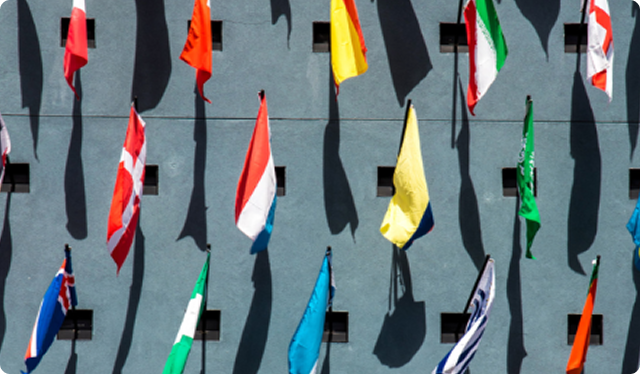
The ERC is co-chaired by two Member States, who coordinate the Coalition for a two-year term, before handing over to the next Co-Chairs. For the 2024-26 term, the ERC Co-Chairs are Colombia and Spain.
-
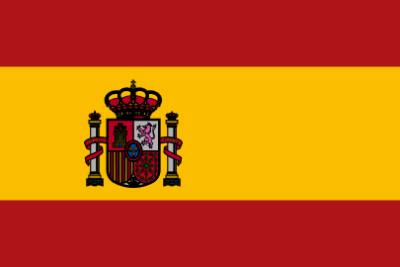
Spain
Represented by the Ministry of Foreign Affairs, European Union and Cooperation (MAEUEC) and the Ambassador-at-Large for the Rights of LGTBI+ Persons of Spain, Jorge Noval.
-
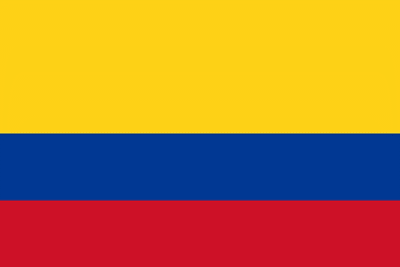
Colombia
Represented by the Ministry of Foreign Affairs and the Ambassador at-Large for Gender Issues and Feminist Global Policy of Colombia, Arlene Tickner.
Governance of civil society is led by the Civil Society Co-Chairs, who in turn also chair the Civil Society Core Group, attended by civil society members who take active roles in the ERC, as well as the Secretariat.
-
Fundación Triángulo
Civil society organization from Spain.
-
Caribe Afirmativo
Civil society organization from Colombia.

Executive Committee
The Executive Committee comprises the State Co-Chairs, Civil Society Co-Chairs, Co-Chairs of the Thematic Groups, and UNAIDS and the World Bank, together with the Secretariat.
They meet regularly to agree on key decisions and progress the work of the ERC. This body is vital to provide overall governance and oversight of the ERC mechanism, to set priorities for the Coalition, and to agree on internal procedures and processes.
The organisational structure of the Equal Rights Coalition is outlined in the following chart, which contains all of its governance and thematic structures and bodies.
-
-
ERC Executive Committee
Co-chairs of Thematic Groups, ERC Co-Chairs & CSO Co-Chairs, plus UNAIDS & World Bank, together with the Secretariat.
-
Member State Coordinating Committee
All 44 Member States, ERC CSO Co-Chairs and CSO Co-Chairs of Thematic Groups, as well as Secretariat.
-
Member state co-chairs
- Colombia
- Spain
-
Civil society co-chairs
- Fundación Triángulo
- Caribe Afirmativo
-
-
-
Donor Coordination
United Kingdom & MOLI and Synergía IHR
-
International Diplomacy
Chile & AFDA
-
National Laws and Policies
Malta & OTD Chile
-
SDGs and 2030 Agenda
PromSex and TBD
-
Humanitarian Protection
Mexico and Rainbow Railroad
-
-
-
ERC CSO Core Group
Up to 30 members, including all CSO Co-Chairs and the Secretariat.
-
ERC CSO Network
All CSOs on Thematic Groups, and other interested CSOs from Member and Non-Member States.
-
-
-
Secretariat
Housed at ILGA World as its host organization
-
Our Milestones
Resources & Publications
GET INVOLVED
With the ERC, whether as a civil society organisation, government, or other stakeholder.